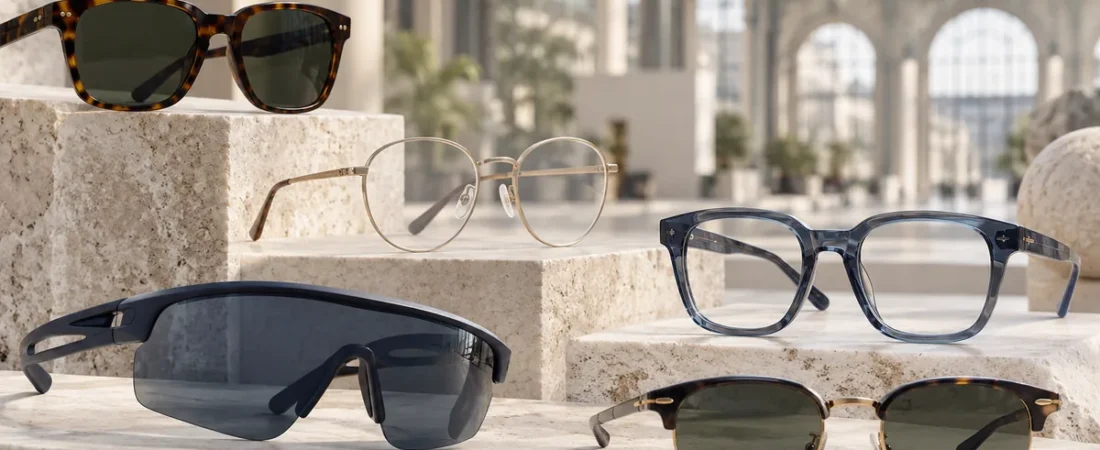
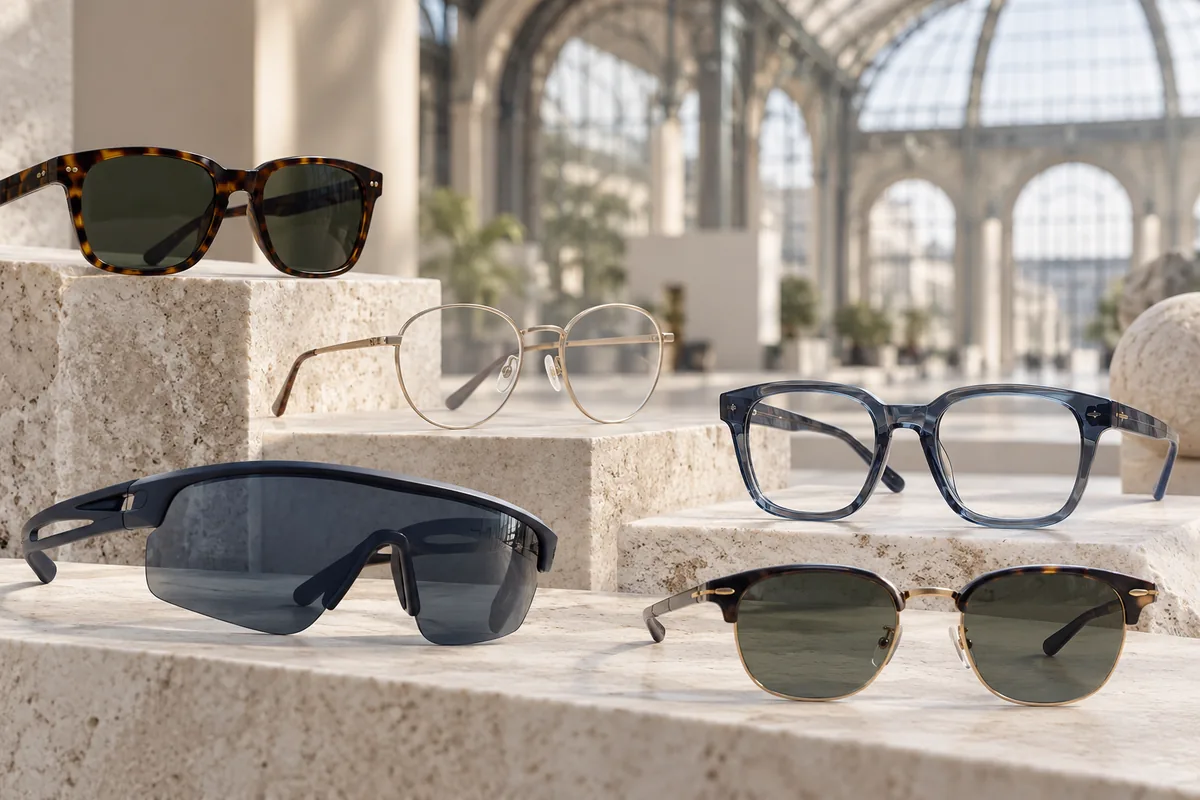
SILMO Paris is a useful moment for eyewear professionals to compare ideas, meet suppliers and review where optical fashion is heading. The 2026 edition took place September 25–28 at Paris Nord Villepinte. Whether you attended or are researching the show afterward, the more durable value is turning what you learn into clear product and sourcing decisions.
This SILMO Paris 2026 eyewear sourcing guide is for brands, opticians, wholesalers, distributors and retail buyers planning wholesale sunglasses, optical frames or a private-label collection. It connects published event information with product selection, supplier comparison and sample approval.
What Was SILMO Paris 2026?
SILMO Paris is an international professional event for the optics and eyewear sector. Its official English site describes it as a meeting point for the international eyewear and optics industry, with new collections, innovation and creativity among its themes. The 2026 event ran from September 25 to 28 at Paris Nord Villepinte Exhibition Centre. See the official SILMO Paris site and practical visitor information for event facts.
For eyewear brands and buyers, an international eyewear trade show can support several jobs: discovering collections, discussing new product concepts, comparing lens and frame options, meeting distributors, and identifying possible manufacturing relationships. Opticians and retail teams may focus on fit, assortment and customer demand; wholesalers and distributors may weigh breadth, replenishment, price architecture and supplier responsiveness. A fair creates introductions, but due diligence and sample evaluation still need to happen afterward.

Eyewear Trends and Product Questions Around SILMO 2026
Trend coverage should distinguish observed facts from a buyer’s interpretation. SILMO’s official Trend Forum discusses forms, materials and colors as ways eyewear expresses individuality. That is a useful source for the event’s design direction, but it does not prove that one particular shape, color or material will sell in every market. Buyers should compare the show’s creative signals with their own sales data and customer profile.
Frame shapes and color
Review frame proportions, bridge fit, temple design and the balance between familiar silhouettes and statement pieces. For a wholesale assortment, a trend-led shape often works best beside proven core models rather than replacing them. Color decisions also need a market lens: compare frame finishes and lens tints against your brand palette, customer age range, retail price and seasonal plan. Ask suppliers which combinations are available consistently and which are limited to a specific run.
Materials, comfort and lightweight construction
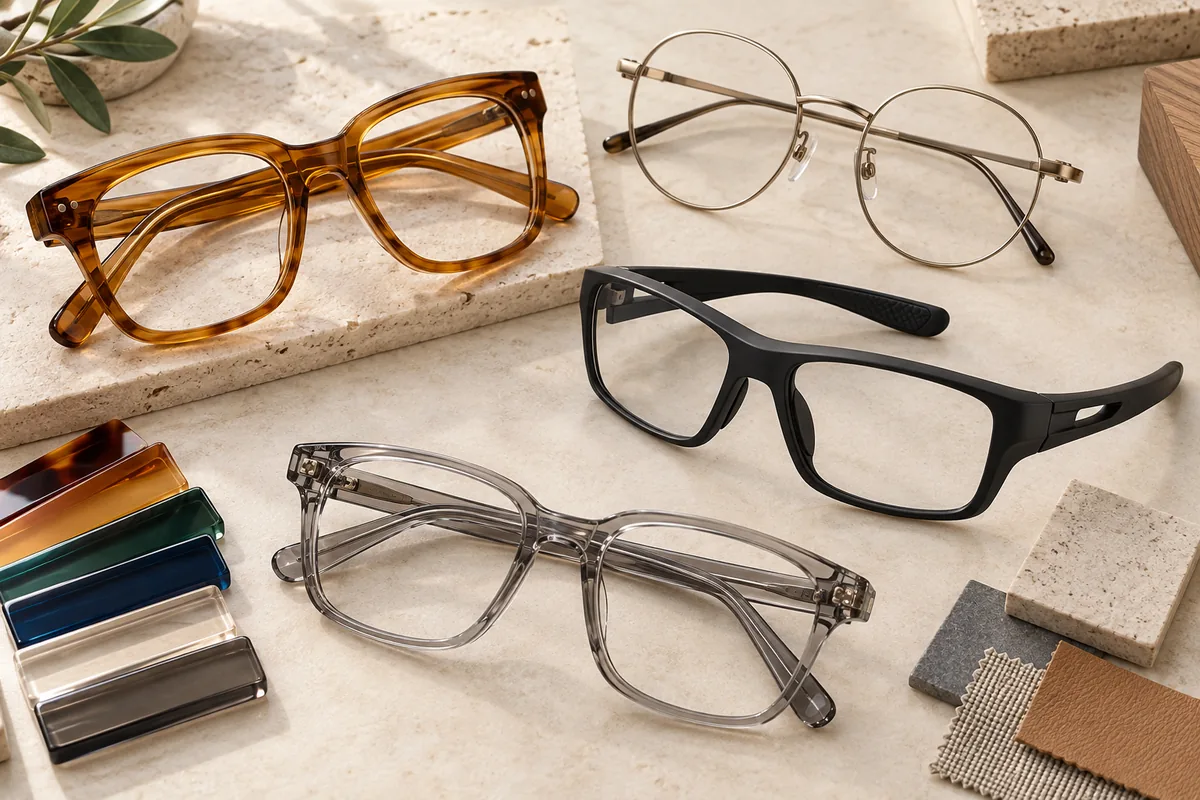
Acetate, metal, TR90 and other polymer constructions each create different visual, fit and production considerations. Lightweight eyewear can be a useful product attribute when the fit and durability also meet expectations. Compare weight, flexibility, finish, hinge feel and adjustment needs on physical samples. Avoid choosing a material from a trend label alone; confirm the model-specific specification and how it is controlled between batches.
Polarized sunglasses and sports eyewear
Polarized sunglasses and sports eyewear serve clear use cases, from bright outdoor settings to active use. Buyers should ask what lens construction and performance documentation apply to the exact model and intended market. Treat terms such as UV400 as a product claim to verify against suitable documentation rather than assuming every model shares the same lens specification. Frame coverage, grip, comfort and fit are also important when evaluating sports eyewear.
Smart eyewear, sustainability and customization
Innovation may include connected functions, new retail experiences or production ideas, but buyers should separate demonstrated product features from broad marketing language. For any smart eyewear concept, clarify power, connectivity, warranty, service and applicable market rules. For materials described as sustainable or recycled, request composition and chain-of-custody evidence relevant to the claim. Private label and customization can differentiate a range, but every added color, logo treatment or package component may affect setup, minimums, lead time and quality checks.
What Eyewear Buyers Should Check in 2026
Before requesting a quote, write a short buying brief: target customer, sales channel, product category, price position, launch date, first-order quantity and required compliance documents. Send the same brief to each candidate so quotations can be compared on a like-for-like basis.
Send suppliers a complete buying brief
- Market and channel: destination country, customer group and retail or wholesale channel.
- Product specification: model references, dimensions, material, lens configuration and colors.
- Order breakdown: quantity per model and color, plus expected repeat-order needs.
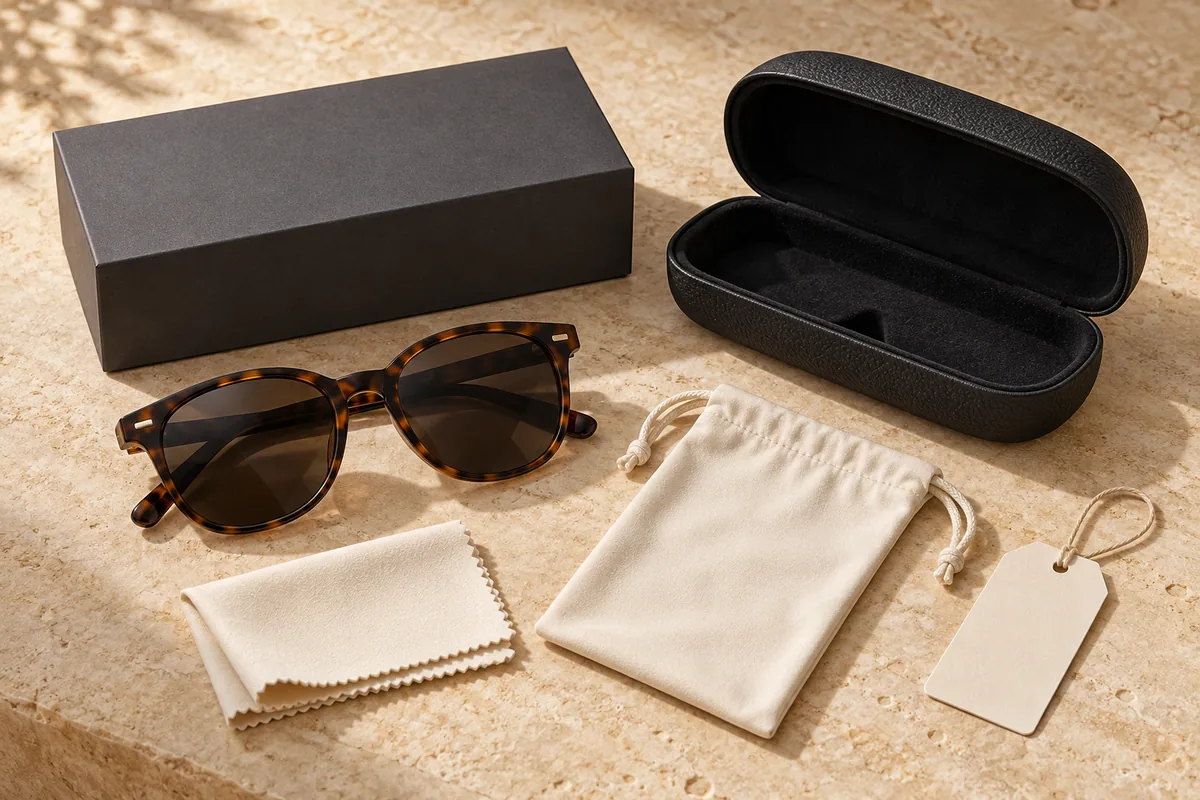
- Brand presentation: logo method, case, cloth, box, barcode and carton requirements.
- Approval and delivery: sample deadline, inspection criteria and required arrival date.
Ask an eyewear manufacturer or wholesale eyewear supplier to itemize model, material, dimensions, lens, finish, logo, packaging, quantity, price basis, sample cost, production lead time and delivery assumptions. Confirm whether MOQ applies per model, color, lens combination or packaging design. If you need quick assortment testing, ask about current ready stock and confirm availability at the time of order. For custom development, agree the sample stages and written approval points before bulk production.
Quality control should refer to an approved sample and agreed specification. Ask how the supplier checks alignment, hinges, surface finish, lens fit, logo placement and packaging; which checks apply to your model; and how a mismatch is recorded and resolved. Supplier communication matters too: note who owns technical questions, how changes are approved, and when you will receive status updates. The lowest quoted unit cost is not automatically the lowest-risk sourcing route if key services or specifications are missing.
Turn sample feedback into an approval record
Use a short scorecard for each sample: dimensions and fit, assembly, finish, lens configuration, branding and packaging. Record the model and color reference next to each comment, with a clear pass, revision or unresolved decision. Share photographs where they clarify a visible issue, and ask for a revised sample when an important specification changes. Keep one approved reference sample and the final written specification available to both teams. This gives repeat orders a stable comparison point and helps your team distinguish a new color proposal from an authorized production requirement.
| Check | What to record | Approval evidence |
|---|---|---|
| Fit and dimensions | Frame width, bridge, temples and wearing comfort | Measured sample and buyer feedback |
| Construction | Alignment, hinges, lens mounting and surface finish | Photographs and agreed inspection criteria |
| Lens specification | Lens type, tint and claimed performance | Documents matching the proposed model |
| Branding and packaging | Logo position, color, case, labels and carton | Approved artwork and packed sample |
| Repeat orders | Final SKU, color reference and approved components | Retained reference sample and dated specification |

SILMO Paris and Global Eyewear Sourcing
A trade show is one part of a sourcing process. Buyers may meet brands and distributors at the event while separately looking for production partners that can support repeat orders, custom collections or a specific wholesale requirement. After initial discussions, shortlist suppliers against the same checklist: product fit, sample quality, documentation, MOQ, timeline, packaging, communication and total landed scope.
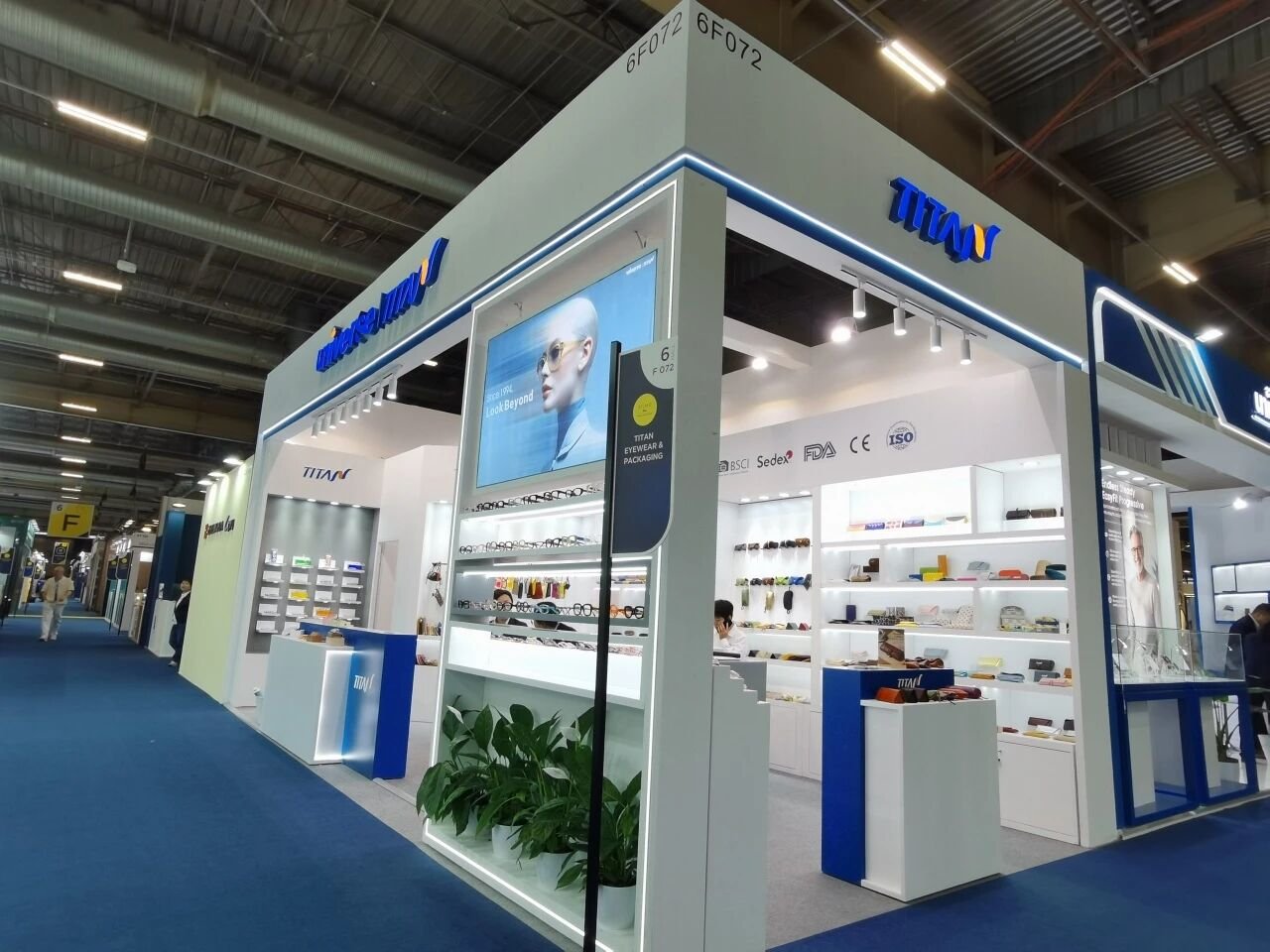
The next step is a specific sample request or technical clarification—not an assumption based on a brief introduction. Record product references and decisions from each conversation. Keep your approved specification, sample comments and quotation together so a new supplier contact can understand the project without relying on memory.
Why Global Buyers Consider China for Eyewear Sourcing
Buyers may consider China because its eyewear ecosystem offers a range of product categories, material and component options, established export workflows and OEM/ODM development routes. The right partner can help coordinate samples, customization, repeat production and export packaging. These capabilities can support a brand’s requirements when the supplier’s scope and quality systems match the brief.
Country of origin alone does not establish quality or fit. Evaluate the individual supplier, compare physical samples and request documentation for the exact product and destination. Make sure the quotation includes the same packaging, branding, inspection and delivery terms across all candidates. A scalable sourcing plan may begin with available models for testing and move to a private-label or custom program once demand and specifications are clearer.
How OUSIKI OPTICS Supports Eyewear Brands and Wholesalers
OUSIKI OPTICS presents B2B sourcing support for sunglasses, optical frames, sports eyewear and packaging. Buyers can review published eyewear products, discuss OEM/ODM and private-label eyewear, and review the company’s manufacturing and sourcing workflow. Published product examples include polarized metal sunglasses 35055 and fit-over polarized sunglasses TR5708.
Depending on model and project, the website describes ready-stock options, low-MOQ options, samples, custom logo and packaging, and OEM/ODM support. Availability, MOQ, lead time, lens options and customization should always be reconfirmed for the requested model and order. A clear inquiry should state category, target market, quantity, preferred models or references, branding and packaging requirements, and desired delivery window.
Looking for an Eyewear Supplier After SILMO Paris 2026?
Build your shortlist from OUSIKI’s wholesale sunglasses, optical frames and sports eyewear. For a branded collection, review private-label development options. Request a catalog, samples or a quotation with your target market, quantities by model and color, branding needs and delivery window.
Frequently Asked Questions
When was SILMO Paris 2026?
SILMO Paris 2026 took place September 25–28, 2026.
Where was SILMO Paris 2026 held?
The venue was Paris Nord Villepinte Exhibition Centre in France.
What products can buyers discover at SILMO?
The event covers the international optics and eyewear sector. Its official exhibitor catalogue includes eyewear categories such as sunglasses, optical frames, connected eyewear and sports eyewear, alongside other optical-sector products. The range varies by edition and exhibitor.
How can I find an eyewear manufacturer for my brand?
Prepare a product brief, compare suppliers on the same requirements, request model-specific samples and documentation, and confirm MOQ, schedule, packaging and quality-control steps in writing before placing an order.
Where can I source wholesale sunglasses?
You can compare eyewear manufacturers, distributors and wholesale suppliers through trade events, official exhibitor directories and direct supplier research. Check samples, lens specifications, pricing scope and delivery terms before committing.
What should I ask an OEM eyewear supplier?
Ask about per-model and per-color MOQ, sample stages, materials, lens options, logo methods, packaging, lead time, inspection criteria, documentation and how specification changes are approved.
Can eyewear brands order low-MOQ custom frames?
MOQ depends on the model, material, color, lens setup and degree of customization. OUSIKI’s site describes low-MOQ options for some projects; buyers should request confirmation for their chosen specification.
Related Eyewear Sourcing Guides
- MIOF Moscow 2026 wholesale buying guide
- 2026 Beijing Optical Fair buyer guide
- How to find eyewear suppliers
- Eyewear quality control and inspection
Request an eyewear catalog, samples or a quotation. Share your market, models, quantities, branding and delivery requirements to receive a project-specific response.
From insight to product
Explore Core Eyewear Categories
Compare product categories, OEM/ODM capability and supply options related to this article.
Sunglasses Manufacturer
Sunglasses for wholesale, OEM/ODM and private label programs.
Explore →Optical Frame Supplier
Optical frames in TR90, metal, acetate and mixed constructions.
Explore →Sports Eyewear Manufacturer
Sports eyewear for cycling, running, outdoor and active markets.
Explore →Custom Eyewear Packaging
Cases, cloths, labels, boxes and branded presentation.
Explore →