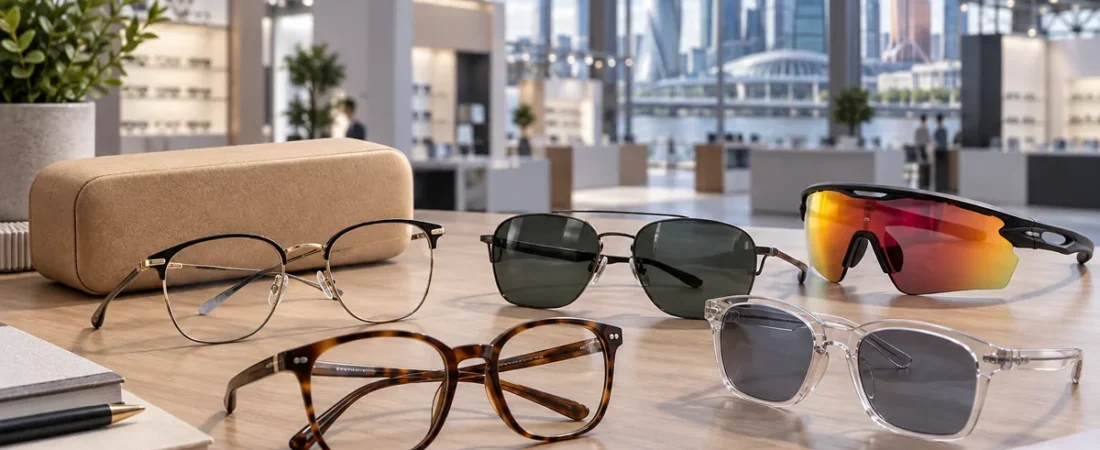
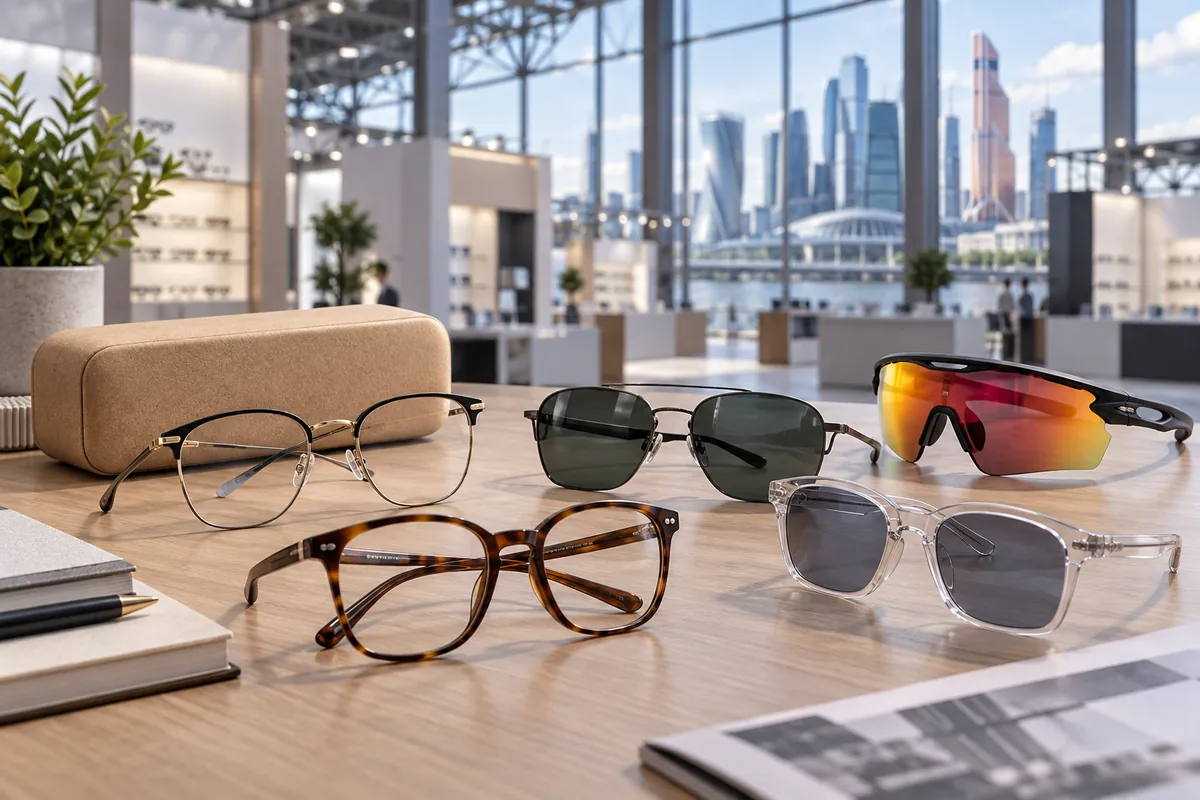
The Moscow International Optical Fair (MIOF) is a meeting point for professionals across the optical and eyewear trade. Its autumn 2026 edition ran September 23–25 at Crocus Expo, Pavilion 2, Hall 11. For buyers reviewing the market after the event, the useful next step is to translate product discovery into a controlled sourcing plan: define the range, compare suppliers and verify the details behind each quotation.
This MIOF Moscow 2026 wholesale eyewear sourcing guide is for distributors, importers, wholesalers, retail chains and brands comparing optical frames, sunglasses, sports eyewear and private-label programs. Event dates and product categories follow public organizer and exhibitor-catalogue information.
What Was MIOF Moscow 2026?
MIOF is the Moscow International Optical Fair, a professional event for the optical industry. The organizer identifies the fair as a platform connecting optical brands and distributors with wholesale and retail trade. Its autumn 2026 edition took place September 23–25 at Crocus Expo, Pavilion 2, Hall 11. The official MIOF exhibition page describes the event’s scope, and the official English exhibitor guide confirms dates and venue.
The September 2026 e-catalogue lists categories including corrective frames, sunglasses, sports glasses, glass lenses, contact lenses and care products, ophthalmic and optometric equipment, optical-shop equipment, cases and accessories. The event therefore serves more than fashion eyewear buyers: it can be relevant to optical retail, distribution and equipment purchasing as well. See the official MIOF catalogue for the current edition’s published exhibitor categories.
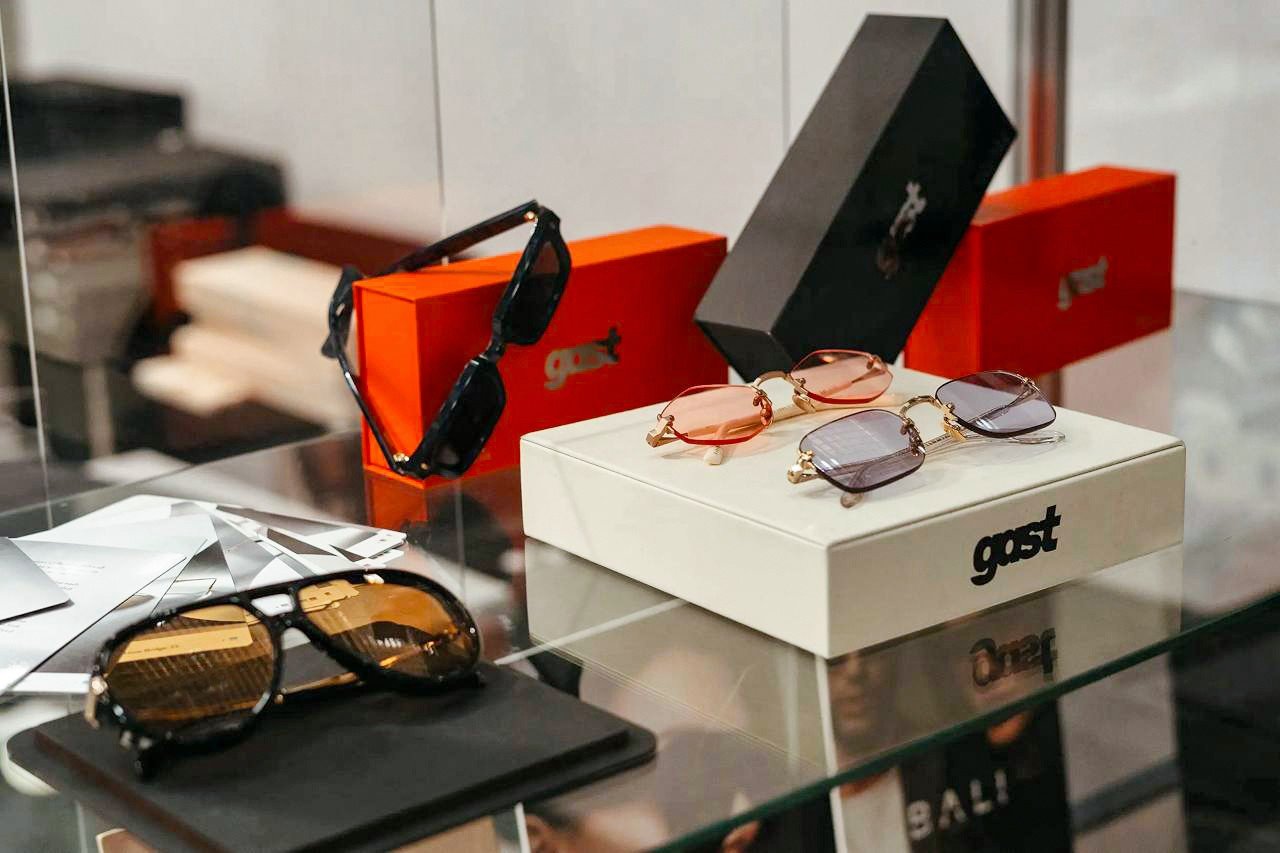
What Buyers Could Discover at MIOF
For eyewear wholesalers, the frame and sunglasses categories offer a place to compare designs, construction, retail positioning and suppliers. Ask how a frame is specified and replenished; compare dimensions, materials, hinge feel, finishing and color availability. For optical frames, fit and compatibility with the buyer’s lens workflow matter as much as the front shape.
Sunglasses buyers should document lens type, tint, intended use and any protection or performance claim. Ask to see documentation for the exact model and destination market. Sports eyewear deserves additional attention to stability, coverage, comfort and the conditions in which the product will be used. Never infer performance from appearance alone.
The fair’s broader scope includes lenses, accessories, optical equipment and cases. A distributor building a full assortment may need to evaluate packaging, display, cleaning accessories and compatible product categories alongside the frames themselves. For each supplier, make a note of the product reference, quoted configuration and next action; a catalogue alone is not a sourcing decision.
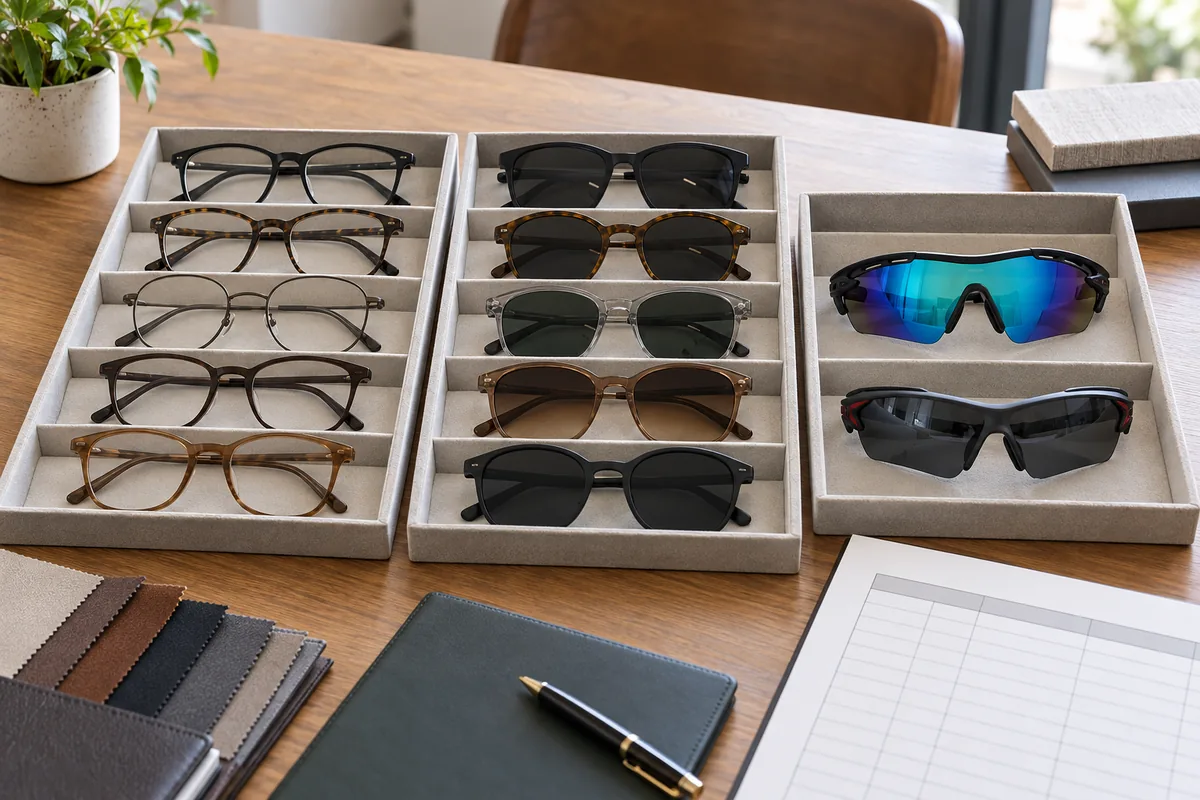
Eyewear Trends and Opportunities for Wholesalers
Treat trends as questions to test, not forecasts to accept. Buyers can compare new proportions, color combinations, lightweight constructions and functional products such as polarized or sports eyewear against sell-through, customer feedback and price bands in their own territory. A balanced wholesale assortment usually needs clear roles: core replenishment styles, newness to attract attention and a limited number of differentiated products.
Consider assortment depth before adding every appealing design. Too many near-identical models fragment demand and complicate reordering. Instead, define what each frame contributes: a price point, material, fit, customer segment or use case. Check that selected colors can be replenished and that the supplier can identify exact model references on future orders.
Private-label opportunities are strongest when buyers know what they want to own: a brand signature, color story, packaging experience or product combination. Customization should support this position rather than add decoration without a commercial reason. Ask whether a proposed feature changes MOQ, sampling, lead time, inspection scope or compliance documentation.
What Distributors Should Consider When Sourcing Eyewear
Request a complete written quotation. It should identify model, material, dimensions, lens configuration, color, logo method, packaging, quantity, price basis, sample charges, production schedule and delivery assumptions. Clarify whether minimum order quantity applies per style, color, lens variation, logo treatment or packaging artwork. Do not compare a ready-stock quote with a custom program as though they include the same scope.
Five steps before approving a wholesale order
- Send the same SKU and quantity brief to each shortlisted supplier.
- Request itemized pricing for the product, branding, packaging and delivery basis.
- Compare samples and resolve outstanding product-document questions.
- Approve the final specification, artwork and packed sample in writing.
- Confirm inspection arrangements, delivery milestones and repeat-order references.
For polarized sunglasses, ask for model-specific confirmation of polarization and any related test records. UV400 or other protection language should be checked against credible product documentation and the destination market’s requirements. Agree what the supplier will provide and what the buyer must verify independently. Packaging should be itemized too: cases, cloths, labels, cartons and barcodes can alter cost and timing.
Samples are a decision tool. Confirm whether the sample is from ready stock or made to a new specification, whether branding is included, and how many revision rounds are practical. Evaluate fit, assembly, symmetry, hinge action, finish, lens mounting, logo placement and packaging. For production, set the approved sample and written specification as reference points for inspection. Ask how deviations are recorded, communicated and resolved.
Delivery planning needs realistic buffers for sampling, artwork approval, production, inspection, export documents and transport. Ask which dates are estimates and which begin only after approval or deposit. Identify a contact for technical questions and agree how specification changes are authorized. Reliable supplier communication is an operating capability, not a courtesy.
China Eyewear Suppliers and International Wholesale Sourcing
International buyers consider China for a broad eyewear supply base, multiple frame and lens options, OEM/ODM development, ready-stock possibilities and scalable production coordination. The fit depends on the specific manufacturer and project. Evaluate suppliers individually: inspect samples, compare the same specification, request relevant documents and confirm which production and inspection activities the supplier manages.
Cross-border sourcing also requires clear commercial details: currency, Incoterm or delivery basis, packaging, carton information, payment stages, shipping responsibility and required import paperwork. Buyers should confirm market-specific product obligations with qualified advisers. A supplier’s broad experience does not replace a product-level check for a particular country or sales channel.
For initial screening, review OUSIKI’s manufacturing and sourcing process, its private-label and OEM/ODM options and published products such as polarized metal sunglasses 35055. These pages provide starting information; confirm current terms and availability directly.
Ready Stock vs Custom Eyewear: Which Is Better for Wholesalers?
Ready stock can suit buyers testing a category, filling a short-term gap or ordering a smaller opening assortment. The design and specification already exist, so the buyer can often focus on current inventory, available colors, samples and delivery timing. Stock is finite and can change before an order is confirmed; request a dated availability check. Branding choices may be limited or add processing time.
Custom or OEM eyewear suits brands and distributors seeking their own logo, color, lens configuration, shape or packaging. It offers more control over product identity and assortment fit, but usually requires additional sampling, approvals and production time. Minimums may apply separately to each model, color or component. Confirm whether tooling or artwork charges apply and how repeat orders will use the approved sample.
Many wholesalers can combine both routes: use ready stock to learn what customers select, then develop a private-label program around the strongest categories. Compare total cost and timing across the whole program, not only unit price. A useful decision rule is to choose ready stock when speed and flexibility dominate, and custom development when differentiation and repeatable brand ownership justify the added work.
| Buying factor | Ready stock | Custom or OEM program |
|---|---|---|
| Main use | Test a category or replenish an existing assortment | Build a differentiated brand collection |
| Specification | Existing model and available configuration | Written specification with agreed customization |
| MOQ | Confirm by available model and color | Confirm separately for frame, color, logo and packaging |
| Timing | Check dated stock availability and dispatch conditions | Allow for sampling, approval, production and inspection |
| Approval | Verify the supplied sample matches the ordered stock | Retain the final approved sample and artwork |
| Reordering | Ask which models and colors can be replenished | Agree component records and change approval |
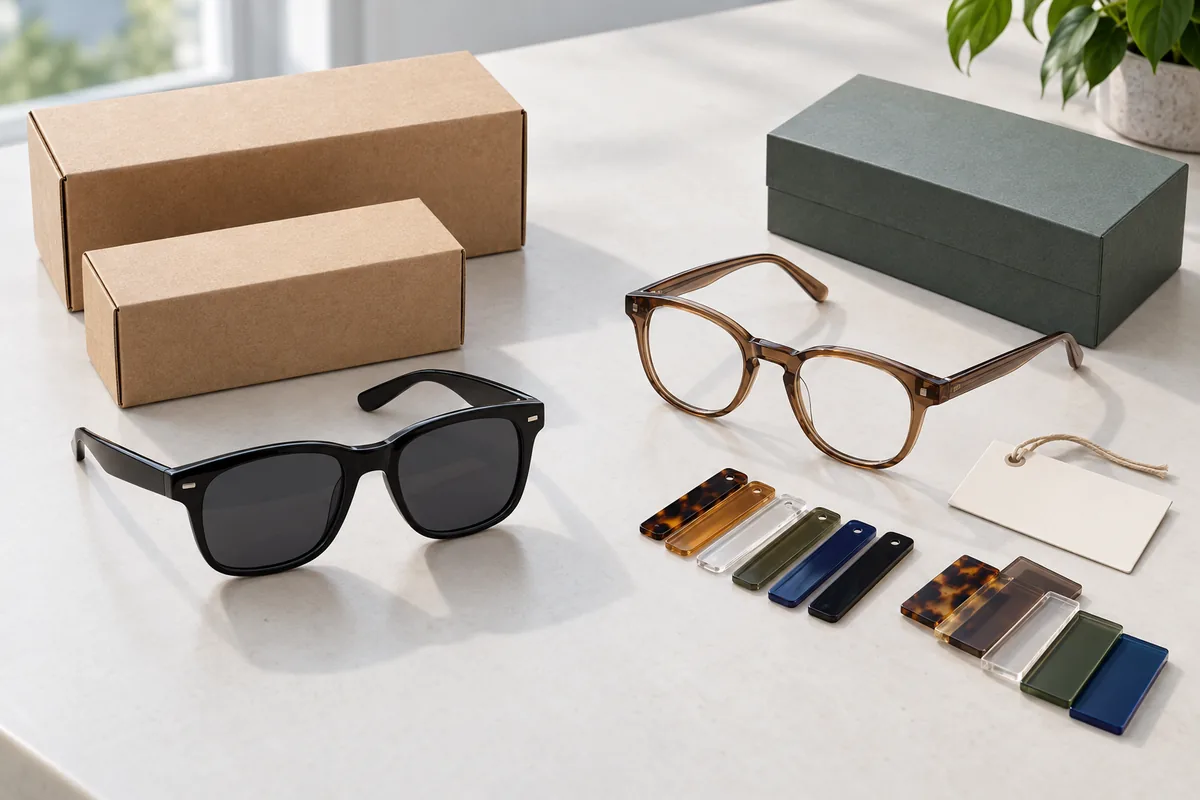
OEM and Private Label Eyewear for Distributors and Brands
An OEM/ODM project works best when buyer and supplier agree the brief before sampling. State the intended market, channel, user, target price, product references, material preferences, quantities, lens needs, logo position and packaging. Ask the manufacturer to identify what can be customized on the selected model and what requires a new design.
Keep approvals staged: design direction, sample, branding proof, packaging proof and production specification. Record changes with dated documents or annotated images. Before bulk production, align the approved sample, inspection scope, quantity tolerances, packaging and delivery plan. This prevents a verbal idea from becoming an unapproved production assumption.
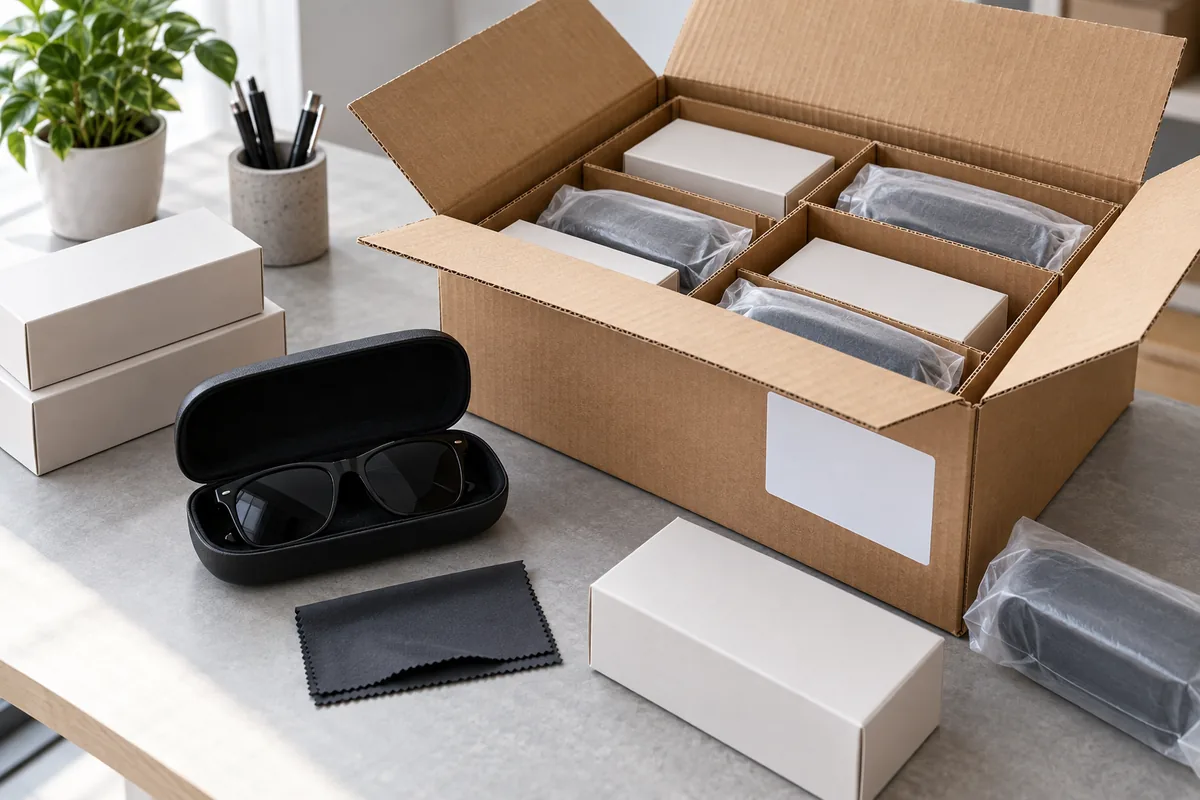
OUSIKI’s private-label eyewear page outlines a concept-to-sample workflow for sunglasses, optical frames and sports eyewear. MOQ and lead time depend on the specific project and must be quoted for the confirmed specification.
OUSIKI OPTICS Wholesale Eyewear Solutions
OUSIKI OPTICS positions itself as a B2B eyewear manufacturer and supplier in China, with products across sunglasses, optical frames and sports eyewear. Buyers can browse the published product range, learn about manufacturing capability and quality workflow and discuss OEM/ODM, private label, logo and packaging options. Product pages show model-level details; for example, TR5708 fit-over polarized sunglasses publishes material, lens and ordering information.
The site describes ready-stock and low-MOQ options where applicable, samples and customized packaging. Confirm inventory, MOQ, lens documentation, sample route, production time and available customization for each requested SKU. To speed up a quotation, share the market, category, target quantity, product references, branding needs and delivery window.
Looking for an Eyewear Supplier After MIOF 2026?
Start with a short specification and compare offers on identical terms. Review samples, resolve product-document questions and confirm stock or production milestones. Browse OUSIKI’s wholesale sunglasses, optical frames and custom eyewear packaging, then request samples or an itemized quotation. Include the destination market, quantity per SKU, logo and packaging requirements, and required arrival date.
Frequently Asked Questions
When was MIOF Moscow 2026?
The autumn 2026 MIOF took place September 23–25, 2026.
Where was MIOF 2026 held?
At Crocus Expo, Pavilion 2, Hall 11, in the Moscow region.
What products were shown at MIOF?
The organizer’s catalogue lists corrective frames, sunglasses, sports glasses, lenses, contact lenses and care products, optical equipment, optical-shop equipment, cases and accessories. The exact mix depends on the edition and participating exhibitors.
Where can wholesalers source sunglasses?
Wholesalers can evaluate manufacturers, distributors and wholesale suppliers through trade events, exhibitor catalogues and direct supplier research. Compare the same product specification, inspect samples and confirm lens documentation, packaging and delivery terms.
How do I find a reliable eyewear supplier in China?
Define your brief, verify company and product information, compare model-specific samples and documentation, ask for a complete quotation, and confirm quality, MOQ, delivery and change-control terms in writing.
Can I add my own logo to wholesale eyewear?
Logo options depend on the model, method, quantity and packaging. OUSIKI describes logo customization for selected products; request confirmation for your chosen SKU and order size.
What is the difference between ready stock and OEM eyewear?
Ready stock uses an existing model and current inventory, usually requiring fewer development steps. OEM eyewear is made or customized to an agreed brand specification and can involve sampling, approvals, separate minimums and longer planning.
Related Eyewear Sourcing Guides
- SILMO Paris 2026 sourcing guide
- 2026 Beijing Optical Fair buyer guide
- How to find eyewear suppliers
- Eyewear quality control and inspection
Request an eyewear catalog, samples or a quotation. Share your market, models, quantities, branding and delivery requirements to receive a project-specific response.
From insight to product
Explore Core Eyewear Categories
Compare product categories, OEM/ODM capability and supply options related to this article.
Sunglasses Manufacturer
Sunglasses for wholesale, OEM/ODM and private label programs.
Explore →Optical Frame Supplier
Optical frames in TR90, metal, acetate and mixed constructions.
Explore →Sports Eyewear Manufacturer
Sports eyewear for cycling, running, outdoor and active markets.
Explore →Custom Eyewear Packaging
Cases, cloths, labels, boxes and branded presentation.
Explore →